Remote Energy Monitoring System - Miges Elektromekanik
Remote Energy Monitoring System: What Does It Measure and How Is It Installed?
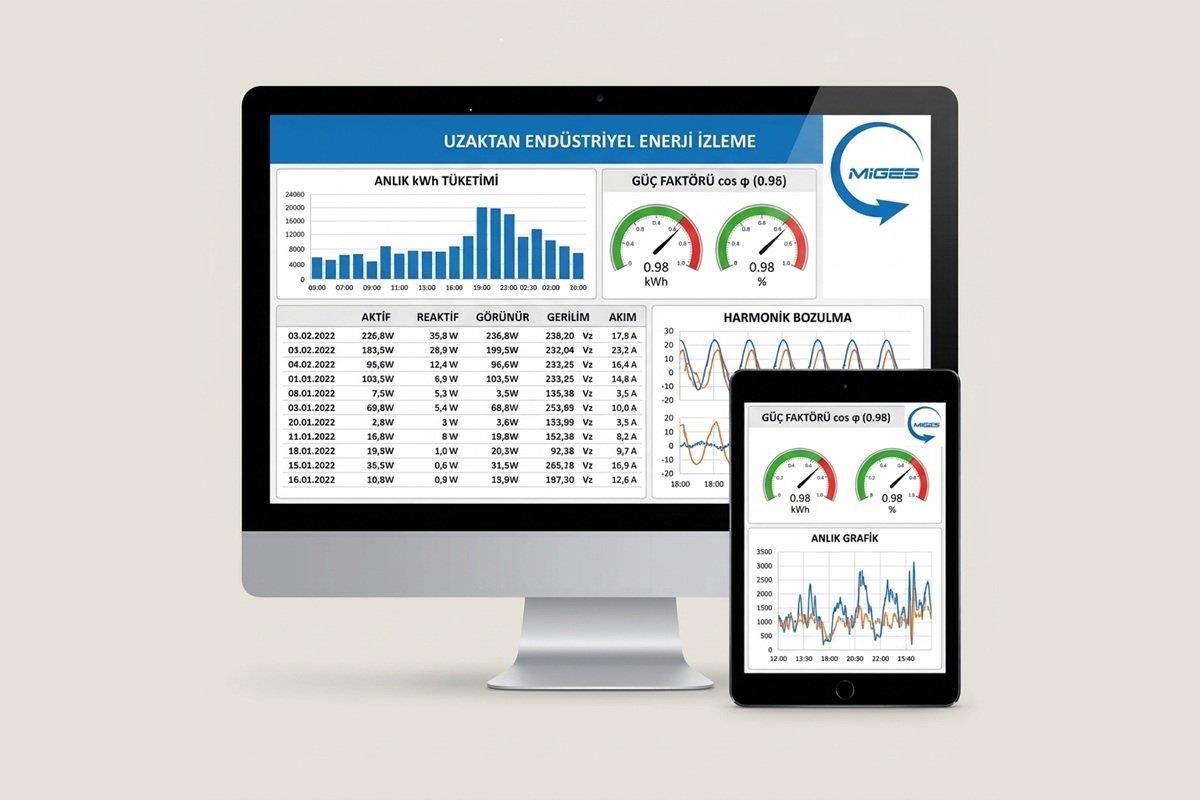
In most facilities, electricity consumption is determined by the bill that arrives at the end of the month. By the time the bill arrives, excess consumption may already have occurred, a parameter may have gone out of limits, or a device may have been under strain for a long time. A remote energy monitoring system reverses this order: it continuously measures and records consumption and electrical quantities, and lets you follow them on screen without going to the facility. At Miges Elektromekanik, we install remote energy monitoring systems for energy efficiency and ISO 50001 work.
What does a remote energy monitoring system measure?
The system collects data from measurement devices placed at the main panel and at designated critical lines. It typically monitors active energy consumption (kWh), demand power, voltage and current values, power factor (cos φ), reactive energy, and power quality parameters such as harmonic distortion. Which points will be measured is determined by an on-site survey, based on the facility's operations and shift schedule.
Which questions does it answer?
-
Where, when and how much energy is being consumed? An energy efficiency roadmap for the facility is drawn up from the measurements.
-
How has consumption changed in the past? Historical consumption reports are generated.
-
Are electrical quantities within the required limits? Limit values are defined and historical reports are created.
-
Who will be notified when a value exceeds a limit? Notifications and alarms are generated at the thresholds you define.
-
Do power quality problems damage equipment? Continuous monitoring makes warning signs visible before a failure occurs and helps prevent equipment breakdowns.
Relationship with ISO 50001
ISO 50001 is a certifiable energy management system standard designed to help organizations manage and continuously improve their energy performance in a systematic way. It is based on the Plan-Do-Check-Act cycle. The "check" step of this cycle relies on measurement: you cannot establish energy performance indicators and a baseline without reliable data. A remote monitoring system provides this data continuously and in recorded form, without manual reading errors. Let's be clear on one point: a monitoring system alone does not get you an ISO 50001 certificate. Certification requires establishing a management system that also covers an energy policy, objectives, responsibilities and internal audits. The monitoring system is the data backbone of that structure.
Who is it suitable for?
It is suitable for production facilities, businesses in organized industrial zones, shopping malls and large commercial buildings. Under the regulations, an industrial enterprise whose average energy consumption over the last three years reaches or exceeds 1,000 TOE must appoint an energy manager. In these enterprises, measurement data is the basic input for the energy manager and for energy audit work. In smaller facilities, the same method is also useful for understanding bill items and energy losses.
How does the installation work?
At Miges, the work follows four steps:
-
On-site survey and measurement: We tour the facility and determine the measurement points and the current situation.
-
Reporting and quotation: We report our findings and present the scope and the offer.
-
Solution and implementation: We commission the measurement devices, communication and the monitoring screen.
-
Regular follow-up: We read the data together and follow up on improvement opportunities.
Frequently Asked Questions
Does a remote energy monitoring system reduce the bill?
Not on its own; it makes visible where the loss is. Savings come from fixing the problems that become visible, such as low power factor, unnecessary idle running and incorrect load distribution.
Does it work with existing meters and panels?
Most facilities need additional measurement devices. Which device goes where is determined during the on-site survey.
Who receives the alarms?
We define the thresholds and the people to be notified together, according to your facility's needs.
Let's determine together which measurements will be meaningful for your facility. You can reach us at +90 532 794 96 02 or write to us through our contact page.